
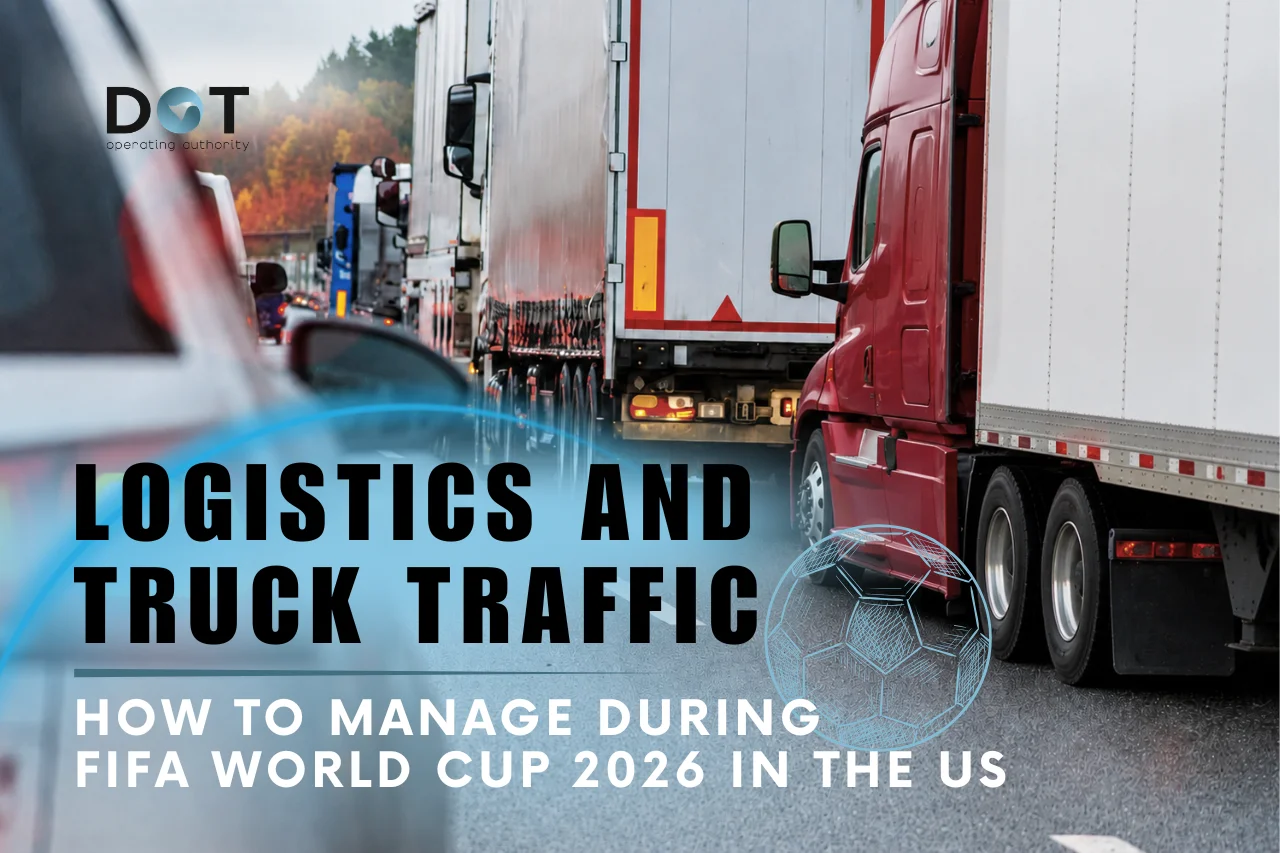
The FIFA World Cup 2026 is going to be massive. Not just for fans, but for pretty much everything moving behind the scenes, especially freight, deliveries, and supply chains. If you’ve ever driven through a major U.S. city during a big event, you already know how things can slow down. Now imagine that on a national scale, across multiple host cities, all happening at the same time. That’s what logistics teams are looking at. We’re talking about packed streets, tighter security, rerouted traffic, and a steady flow of visitors putting pressure on already busy transportation systems and transportation hubs. And in the middle of all that, goods still need to move. On time. Somehow. That’s where things get complicated.
How FIFA World Cup 2026 Traffic Restrictions May Affect Logistics Operations
In most host cities, match days won’t just mean crowds; they’ll mean controlled movement of entire areas. Expect road closures, restricted access zones, and security barriers around stadiums and fan zones. From a logistics point of view, this is where things start to shift quickly. A normal delivery route might suddenly be blocked. Drivers may have to loop around multiple districts just to reach a drop-off point. And even when roads are open, traffic congestion near event zones will likely slow everything down. It’s not just stadium areas either. Once you factor in urban density, commuter traffic, and event-related travel, delays can spread far beyond the actual venue.
So what used to be a predictable schedule turns into something much more flexible… and honestly, a bit unpredictable. For fleets and dispatch teams, this means more adjustments on the fly, more rerouting, and a constant eye on traffic alerts just to stay ahead of delays.
Why Traffic and Delivery Restrictions May Differ From One Host City to Another
One of the tricky parts about the World Cup is that every city will handle it differently. There’s no single playbook. In dense urban markets like New York/New Jersey, Philadelphia, and Atlanta, the biggest issue is simply volume. Too many people, too many vehicles, and not enough space. Add security zones and you get layered traffic congestion that spills into surrounding districts. Seattle is a different story. The road network itself is more limited, so even small disruptions can quickly turn into wider delays. In places like Los Angeles, the challenge isn’t just the stadium; it’s the entire freeway system reacting at once.
Then you’ve got cities like Dallas, Houston, Kansas City, and Miami. These are more spread out, but they come with their own problems, mainly highway bottlenecks, event parking overflow, and delivery timing clashes around peak match hours. And in regional markets like the San Francisco Bay Area or Boston, the issue is coordination. Multiple jurisdictions, bridge crossings, and layered commuter systems make routing harder than it looks on paper. This is where infrastructure issues and planning gaps really show up.
Tips for Navigating World Cup Delivery Restrictions and Traffic Disruptions
The reality is simple: you won’t be able to avoid disruption completely. But you can absolutely reduce the impact if you plan early and stay flexible. A lot of companies will start by redesigning routes ahead of time. Not just one backup route, but several. Because during peak match days, road closures can shift quickly and without much warning.
Scheduling matters just as much. Deliveries pushed into off-peak hours, early morning or late night, tend to avoid the worst traffic congestion. It’s not perfect, but it helps keep things moving when cities get overwhelmed. Real-time data is going to be a big one too. Dispatch teams relying on traffic alerts and live tracking will have a much better chance of reacting to sudden changes. Static planning just won’t hold up when roads start shifting hour by hour. Communication also becomes more important than people expect. Customers, suppliers, and drivers all need to be on the same page. Even small delays feel bigger during high-demand periods, so clear updates go a long way.
Drivers themselves will be dealing with a lot of restricted access points, temporary security checks, and confusion near stadium zones. Without proper guidance, even experienced drivers can lose time just trying to figure out where they’re allowed to go. Inventory planning also starts to matter more than usual. Some companies will simply move stock closer to key markets to reduce pressure on last-mile delivery during peak congestion periods. And of course, there’s contingency planning. Because even if everything is well-organized, things like accidents, weather shifts, or sudden infrastructure issues can still throw everything off. Backup routes and alternative carriers aren’t optional anymore; they’re just part of doing business during events like this.
Conclusion
The FIFA World Cup 2026 is going to put real pressure on U.S. transportation systems. Between traffic congestion, road closures, and overloaded transportation hubs, logistics teams will feel it across nearly every host city. But this isn’t just about disruption. It’s also about adaptation. Companies that stay flexible, use real-time traffic alerts, and plan around urban density instead of fighting it will handle the pressure much better. The rest will likely struggle with delays that could have been avoided. In the end, the World Cup will expose weak points, but it will also push logistics systems to improve. And the ones that adapt early will come out stronger on the other side.