Install a dash cam today, get cheaper truck insurance tomorrow? If only insurance worked that neatly. A dash cam insurance discount is not automatic simply because a camera appears on the windshield. But commercial dash cams can give fleet owners something insurers care about much more: evidence of how the business manages risk. Modern systems can help fleets identify unsafe driving, coach drivers, document incidents, and build a more organized safety program.
Whether that ultimately affects the cost or availability of fleet insurance depends on the insurer and the fleet’s broader risk profile. So the useful question is not just, “Will a camera lower my premium?” It is “Can this technology help me build a safer fleet that presents a better insurance risk?”
Why Is a Dash Cam Important for Safety?
A successful dash-cam program begins with the drivers, not the insurance company. Mack Trucks explains that fleets can improve driver acceptance when management is transparent about why cameras are being used and when footage is used to recognize good driving as well as correct unsafe behavior. Showing examples where video helped clear a driver after an incident can also help employees see cameras as protection rather than simply surveillance.
That distinction can shape fleet driver safety culture. If every clip exists only to punish mistakes, drivers may view the system as something being used against them. If fleets also recognize safe decisions and explain how footage is handled, the camera becomes part of a broader safety program.
How Dash Cams Monitor Driver Behavior
Dash-camera platforms can give safety managers a more consistent view of driving patterns across the fleet. Managers may review recorded events, compare safety metrics, identify recurring behaviors, and see whether the same problem continues after coaching. That makes driver behavior monitoring more evidence-based. Instead of relying only on a complaint or a driver’s memory of an event, managers can review what actually occurred and use the information to identify trends across the fleet.
How AI Alerts and Coaching Support Safer Driving
AI fleet cameras can go further by recognizing certain risky behaviors while the truck is moving. Depending on the system, cameras may identify distracted driving, drowsiness, following too closely, lane drifting, or similar behaviors. Drivers can receive immediate alerts, giving them an opportunity to correct the behavior before it contributes to an accident.
Fleet managers can then use the recorded event for coaching, training, or positive recognition when drivers respond safely. The point is not simply collecting more footage. The value comes from turning that information into better driving habits.
How Does a Dashboard Camera Work?
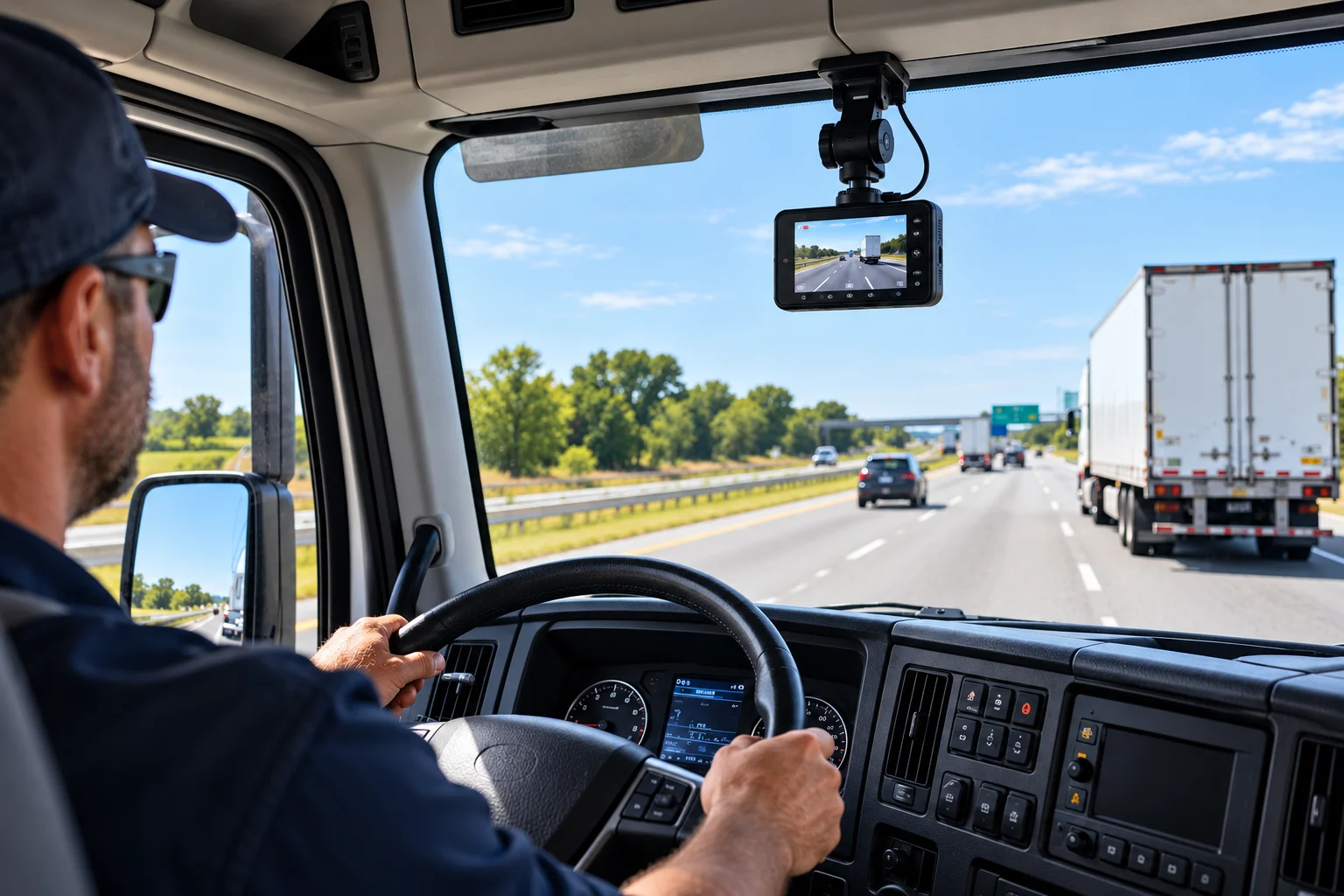
A traditional dashboard camera records video of the road, the cab, or both. AI-equipped dash cameras for trucks add another layer by analyzing driving activity while the vehicle is operating. Depending on the system, the camera may identify events such as speeding, hard braking, distracted driving, lane drifting, tailgating, or failure to stop. Instead of requiring a fleet manager to watch hours of continuous footage, the system can flag and organize important events for later review. This allows safety teams to focus on collisions, near misses, and driving behaviors that may need attention.
How Do Dash Cameras Fit Into Fleet Safety Technology?
Dash cams do not have to operate alone. Camera information can be combined with telematics and fleet-management software to give businesses more context about vehicle activity. That may include information about routes, driver performance, vehicle operation, fuel use, maintenance needs, or compliance-related activity. This is what makes cameras part of broader fleet safety technology rather than simply recording devices. The camera shows what happened. Telematics can help explain what the vehicle was doing when it happened. Together, these systems can give fleet managers a more complete picture of how vehicles and drivers are performing.
Does a Dash Cam Help With Insurance?
It can help but installing a camera should not be confused with buying an insurance discount. Dash cams can support insurance-related risk management by improving driver accountability, documenting incidents, and creating timestamped evidence that can help resolve disputed claims. For insurers, the broader issue is risk. A fleet that uses technology to identify unsafe behavior, coach drivers, investigate collisions, and document its safety practices may present a different underwriting picture from a business that cannot show how it manages those exposures.
That is where the potential insurance value lies. But whether a particular insurer offers a dash cam insurance discount, gives underwriting credit, or simply considers the technology as one factor depends on the insurance company and policy. Dash cams should therefore be viewed as part of a larger safety and risk-management strategy, not as a guaranteed way to reduce premiums.
Do I Get Cheaper Insurance With a Dash Cam?
Possibly but there is no guaranteed discount.
Better safety performance can contribute to fewer or less costly claims, and claims history can influence commercial insurance pricing over time. The relationship is therefore not simply:
- camera installed = lower premium A more realistic connection is:
- camera + effective safety program + driver coaching + improved loss history = potentially stronger insurance results
A useful example comes from the United Kingdom. Everywhen reports on a 12-month RSA Insurance and Lytx study involving an HGV fleet using AI-enabled dash cameras.
After implementation:
- Claims fell by 21%
- Claims frequency declined from 29% to 8%
- Loss ratios fell from 48% to 15%
- Average claim costs dropped from £1,713 to £423
Those results are significant, but they should not be interpreted as a guaranteed U.S. insurance discount. They came from a specific UK HGV fleet using a particular safety program and technology. The case study shows that dash cams can support measurable risk improvement under the right conditions. It does not mean every trucking company will achieve the same results or receive the same premium reduction. Insurance pricing depends on many other factors, including claims history, driver records, fleet size, operating radius, cargo, vehicle type, coverage limits, and the insurer’s underwriting guidelines.
Can You Use Dash Cam Footage as Evidence?
Dash-cam footage can provide a timestamped visual record of an incident. That can be especially useful when the truck driver and another motorist give different accounts of what happened. Footage may help show traffic conditions, vehicle movements, road position, signals, or the actions of other drivers before a collision. This makes dash cam evidence for insurance claims useful when determining what actually happened. Video can also support a driver’s version of events when the truck driver was not responsible.
That does not mean dash cam footage automatically decides every insurance claim or legal dispute. Investigators may still consider police reports, witness statements, vehicle damage, telematics, and other evidence.But having video can provide information that would otherwise be missing. Sometimes the most valuable footage is not the clip proving your driver made a mistake. It is the clip proving they didn’t.
How Can Dash Cams Support Truck Fleet Risk Management?
Truck fleet risk management involves controlling the operational, financial, legal, and safety exposures that come with running commercial vehicles. Dash cams can contribute to that process in several ways. They may support incident investigation, driver coaching, theft prevention, vandalism documentation, and vehicle-damage investigations. Recorded footage may also assist law enforcement or insurance professionals after an incident. Accidents can create costs beyond vehicle repairs. A serious collision may lead to downtime, towing expenses, lost productivity, legal costs, claim expenses, and higher insurance costs. Reducing those exposures is one reason many fleets incorporate cameras into broader fleet safety programs. But camera programs also create responsibilities. Drivers should understand why cameras are installed, what footage is collected, who can access it, and how the information may be used. That becomes particularly important when a fleet uses inward-facing cameras.
A responsible program should clearly define:
- The purpose of the cameras
- Which events are recorded
- Who can access footage
- How long footage is retained
- How recordings are used for coaching or investigations
- How driver privacy is handled
Fleet managers should also limit access to recorded information to people who actually need it. A good camera policy should not amount to “we record everything and figure out the rules later.” Transparency helps drivers understand that the technology is part of a safety program rather than an undefined surveillance system. Responsible data handling is therefore part of risk management too.
A dash cam can be valuable fleet safety technology. It is not a magic coupon for cheaper truck insurance. The stronger business case is that cameras can become part of a structured safety program that helps a fleet understand driver behavior, investigate incidents, coach employees, and document how the company manages risk. Insurance companies still evaluate the broader operation. Driver history, claims, fleet size, cargo, operating territory, vehicle type, coverage limits, safety practices, and other underwriting factors can all affect the final premium.
That means fleet owners considering dash cameras should speak with their insurance provider and ask whether the technology affects underwriting, available safety programs, or potential discounts for their specific policy. A dash cam cannot promise cheaper coverage. But helping a fleet create safer driving habits, stronger documentation, and fewer costly surprises? That is a much better reason to install one.