
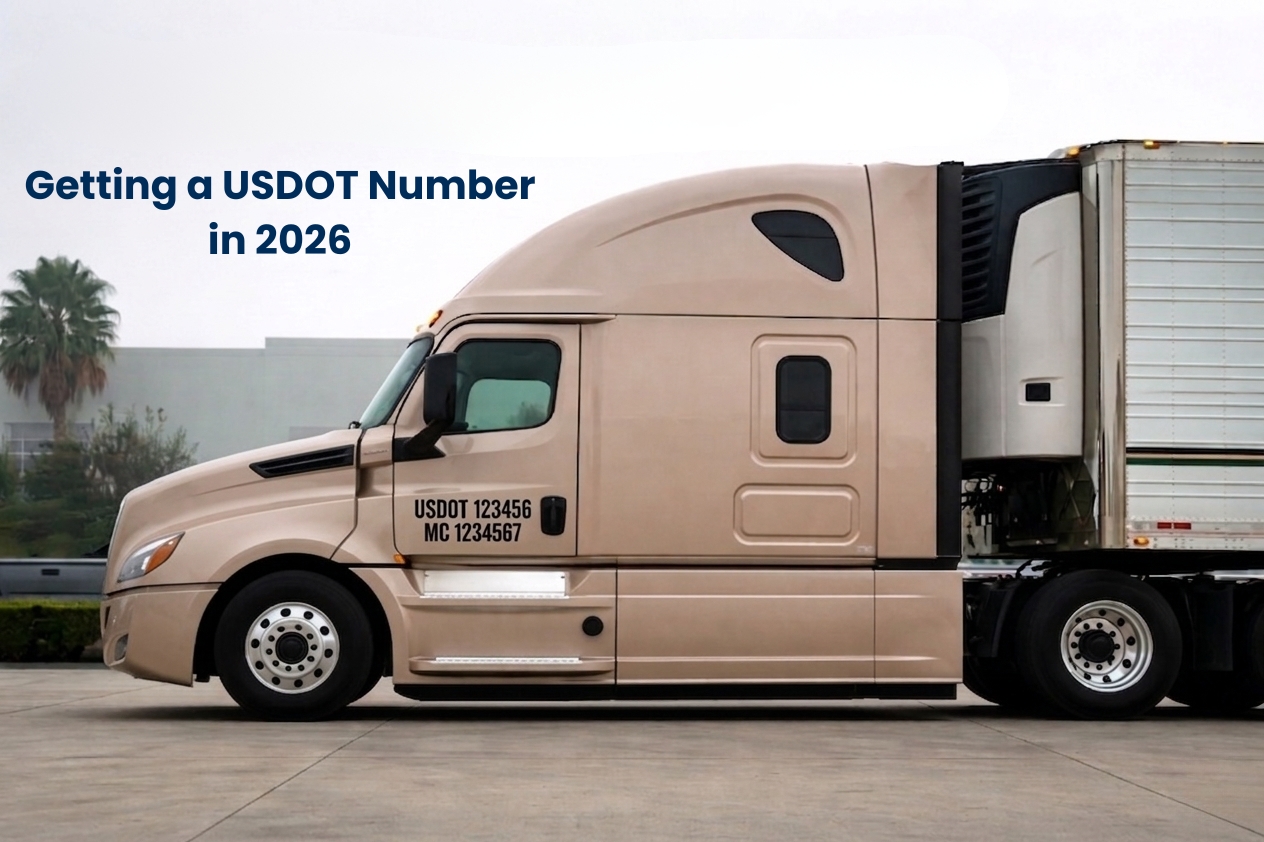
If you’re planning to operate a commercial vehicle in the U.S., getting a USDOT number is one of the first and most important steps. But many new carriers make the same mistake; they jump straight into the application for a DOT number without proper preparation. The result? Delays, rejected filings or compliance issues that slow down operations before they even begin.
So, what is a DOT number, and how do you get it the right way in 2026?
This guide walks you through the full process from determining whether you need one to complete your DOT number registration and preparing for compliance. While it’s true that many carriers receive their DOT number quickly, the real challenge often comes afterward, when insurance, authority activation, and federal requirements come into play.
What Is a DOT Number and Who Needs It?
A USDOT number is a unique identifier issued by the Federal Motor Carrier Safety Administration. It allows regulators to monitor a company’s safety performance, inspections, audits, and overall compliance. In simple terms, if you operate a commercial vehicle that could impact public safety, you’ll likely need one.
Most commonly, a DOT number is required if you operate across state lines, transport hazardous materials, carry passengers for compensation, or use vehicles with a gross vehicle weight rating (GVWR) of 10,001 pounds or more. That threshold alone catches many operators off guard, especially those using larger pickups or vans for business purposes. A frequent question is whether staying within one state exempts you. The answer is: not always. Some states require DOT registration even for intrastate carriers, depending on the type of operation.
DOT Number vs MC Number: What’s the Difference?
One of the biggest points of confusion in the industry is the difference between a DOT number and an MC number. Think of it this way: your DOT number is used for identification and safety tracking, while your MC number (operating authority) gives you legal permission to transport goods or passengers for compensation in interstate commerce.
If you’re operating as a private carrier, you’ll typically only need a DOT number. But if you’re running a for-hire business across state lines, you’ll likely need both. This distinction is critical, because applying for the wrong type of authority or skipping it entirely can delay your ability to legally operate. Another key difference is timing. DOT numbers are usually issued immediately after submission, while MC authority can take longer to activate since it depends on insurance filings and additional documentation.
Form Your Business and Get an EIN
Before you apply for a USDOT number, your business needs to exist legally on paper. You can structure your company as an LLC, corporation, or sole proprietorship. If you’re wondering, do you need an LLC to get a DOT number? The answer is no. However, many carriers choose an LLC for liability protection and long-term flexibility. You’ll also need an EIN from the Internal Revenue Service. This number connects your business to federal tax records and is required for most registrations. One of the most overlooked details at this stage is consistency. Your business name, EIN, and address must match exactly across all documents and applications. Even small discrepancies can lead to processing delays.
Gather the Required Information Before Applying
Preparation is what separates a smooth application from a frustrating one. Before you apply for a DOT number, take time to organize your business details, operational plans, and fleet information. This includes your company structure, the type of cargo you’ll transport, and how many vehicles and drivers you plan to operate.
Some applicants ask, “Can I get a DOT number without a truck?” Yes, you can. However, you’ll still need to provide accurate projections about your operation. Guessing or entering inconsistent data can raise red flags during review. All of this information will be submitted through the Unified Registration System (URS), and errors here can lead to delays or even compliance issues later on.
Apply for a DOT Number Through Unified Registration System
Once everything is prepared, you’re ready to apply for a USDOT number through the FMCSA’s Unified Registration System. This is the official application for DOT number registration. If completed correctly, your DOT number is typically issued right away. However, if you also applied for operating authority, that portion will remain pending until all additional requirements are met.
At this stage, accuracy matters more than speed. Rushing through the form is one of the most common reasons applications get flagged or delayed.
Get Insurance and File BOC-3
If your business requires operating authority, the next step is activating it. This involves securing the appropriate level of liability insurance and filing a BOC-3 form. The BOC-3 designates a process agent who can receive legal documents on your behalf in each state where you operate. Without these filings, your authority will remain inactive even if your DOT number has already been issued.
Register for Required Compliance Programs
After completing your DOT number registration, compliance responsibilities begin almost immediately. Carriers with CDL drivers must enroll in the FMCSA Drug and Alcohol Clearinghouse, while interstate operators are required to complete the Unified Carrier Registration annually. These programs are not optional, and missing them can result in fines or enforcement actions.
Prepare for the New Entrant Safety Program
Every new carrier enters the FMCSA’s safety monitoring system upon registration. Within your first year, you’ll undergo a safety audit designed to ensure you’re following federal regulations. This isn’t something to take lightly. You’ll need to maintain organized records, including driver qualification files, hours-of-service logs, and maintenance documentation. Failing the audit can lead to penalties or even loss of operating authority.
Complete Additional State and Operational Requirements
Beyond federal requirements, there are additional steps to fully operate legally. You’ll need to maintain driver medical certifications, keep up with vehicle inspections, and establish maintenance tracking systems. If you operate heavy vehicles across state lines, you’ll also need to register for IRP and IFTA to handle fuel taxes and apportioned registration.
These operational details are where many new carriers fall behind, not because they’re complicated, but because they’re often overlooked early on.
Common Mistakes When Applying for a DOT Number
Most delays don’t happen because the process is difficult; they happen because of simple, avoidable mistakes. Incorrect business classification, mismatched EIN information, and applying without insurance readiness are some of the most common issues. Another major one is misunderstanding whether you need an MC number at all. Taking a little extra time upfront can save weeks of back-and-forth later.
Get Your DOT Number Without Delays or Mistakes
At the end of the day, getting a DOT number is not just a formality; it’s the foundation of your compliance as a carrier. When done correctly, it sets you up to operate legally, avoid penalties, and move forward with confidence. When rushed or done incorrectly, it can create unnecessary obstacles right from the start.
That’s why many carriers choose to work with professionals. DOT Operating Authority helps simplify the entire process from DOT and MC registration to compliance setup so you can avoid costly mistakes and start operating faster. Instead of navigating regulations alone, you can rely on experienced specialists to make sure everything is handled correctly from day one.
If you’re ready to get started or need guidance with your DOT number registration, you can speak directly with a compliance specialist at (888) 669-4383 or (888) 233-0899 and get your application moving without delays.