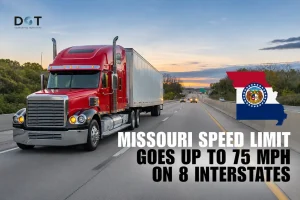
Missouri Speed Limit Goes Up to 75 MPH on 8 Rural Interstate Corridors
Drivers will soon be able to legally travel a little faster on several stretches of rural interstate in Missouri.



Drivers will soon be able to legally travel a little faster on several stretches of rural interstate in Missouri.

Freight moving between the United States and Mexico is growing in value, while one part of the cross-border driver pool is reportedly getting smaller.

Los Angeles began activating its first automated speed enforcement cameras on October 26, 2026, marking the start of a phased citywide rollout.
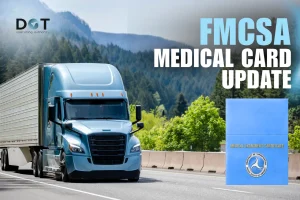
The latest FMCSA medical card update changes how most CDL and commercial learner’s permit holders prove that they are medically certified. As of October 12, 2026, drivers licensed in every state except Alaska and their motor carrier employers can no longer rely on a paper medical examiner’s certificate as proof of medical certification. Alaska remains the only exception because it has not yet implemented the Medical Examiner’s Certification Integration, commonly known as National Registry II or NRII. For most drivers, the system now depends on electronic transmission of medical certification information rather than paper documents. Alaska drivers, however, may continue using a paper certificate for a limited period under a temporary exemption. The key questions are who qualifies for that exception, how long paper proof can be used, and how NRII changes the way medical certification reaches state licensing agencies.
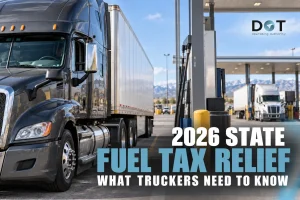
State fuel tax relief looks very different depending on where a truck operates. Some states have temporarily reduced or suspended taxes on both gasoline and diesel. Others have limited relief to gasoline, delayed a scheduled tax increase, or proposed a future tax holiday that still requires legislative approval.
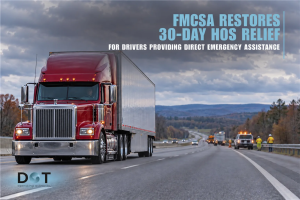
FMCSA has restored a longer window for automatic hours-of-service relief during qualifying regional emergencies. Effective October 5, 2026, the FMCSA emergency exemption triggered by a regional emergency declaration can last up to 30 days, instead of the previous 14-day period.
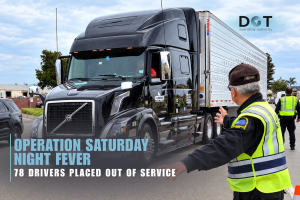
During Operation Saturday Night Fever on September 26, 2026, federal and state officers inspected commercial vehicles across South Carolina, North Carolina, Florida, and Georgia. FMCSA reported 552 inspections, with 78 drivers and 25 vehicles placed out of service. Among the driver violations, 12 involved English Language Proficiency requirements.

FMCSA is warning motor carriers about a Motus scam that uses emails designed to look like a required registration-system update. According to the Federal Motor Carrier Safety Administration, recipients have received an FMCSA scam email with the subject line “Notice of Required Off-Cycle Update- Motus email.” The message urges the recipient to update a carrier profile by clicking a link labeled “New MOTUS Portal.” The linked portal is fraudulent. Carriers…
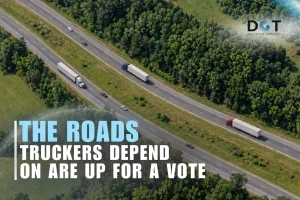
Some of the roads commercial drivers use every day are heading to the ballot box. On November 3, 2026, voters in communities across the United States will consider transportation-related ballot measures involving roads, highways, bridges, transit systems, and other infrastructure. Several proposals would provide or continue transportation funding for paving, road construction, congestion-related projects, and safety improvements. The measures take different forms. South Carolina and Georgia have sales-tax questions. Virginia…
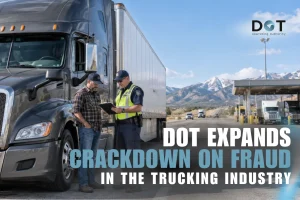
The federal government's latest trucking fraud push is moving beyond paperwork problems and into driver qualifications, CDL schools, state licensing systems, and federal investigations. Transportation Secretary Sean Duffy said in September that removing what he called “fraudsters” from trucking could improve highway safety and make competition fairer for carriers following the rules. His remarks came shortly after DOT announced a broader enforcement effort involving the Federal Motor Carrier Safety Administration,…