
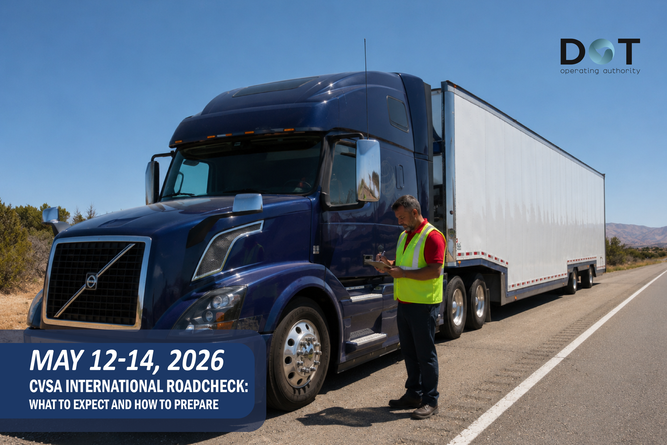
Every year, there’s a short window in trucking where things just feel different on the road. Trucks slow down a bit, drivers are more alert, and inspections suddenly feel a lot more “present” than usual. That’s International Roadcheck.
The CVSA International Roadcheck 2026, scheduled for May 12–14, is one of those moments. For 72 hours, enforcement ramps up across North America in a coordinated push led by the Commercial Vehicle Safety Alliance (CVSA) with support from agencies like the FMCSA. It’s not random, and it’s not small. Thousands of inspections happen in a very short span of time, and fleets feel the pressure whether they get stopped or not. Think of it less like a routine check and more like a full industry snapshot of how trucks are maintained, how drivers are operating, and how seriously compliance is being taken across the board. And the part most carriers don’t ignore: what happens during those three days tends to echo well beyond them.
CVSA International Roadcheck Scheduled for May 12–14
During the CVSA roadcheck 2026, inspectors are out in full force. You’ll see them at weigh stations, roadside checkpoints, and sometimes just out on active freight corridors pulling vehicles over based on what they observe. It’s not random selection. Trucks that look questionable, have visible defects, or show compliance risk tend to get flagged faster. Inspections usually fall into a few structured levels:
- Level I Inspection (the big one): full driver and vehicle inspection
- Level II: walk-around inspection
- Level III: driver-only inspection
- Level V: vehicle-only inspection
If there’s one to really understand, it’s Level I. It’s the most complete and the one that most fleets plan around when they think about the CVSA Level 1 inspection checklist.
Why Roadcheck Exists (and Why It Actually Matters)
On paper, Roadcheck is about safety. And that’s true, but there’s more to it. The purpose is to make sure commercial vehicles and drivers are actually following federal safety rules, not just on paper but in real-world conditions. What happens during these inspections doesn’t stay local either. It feeds into long-term compliance tracking systems like CSA scores, which means one bad inspection can follow a carrier for a while.
A quick detail people sometimes miss: if a vehicle passes a Level I or V inspection with no critical issues, it may receive a CVSA inspection decal. That decal is basically a short-term “this truck was recently checked and cleared” marker, valid for up to three months. It doesn’t guarantee you won’t get stopped again but it does signal you’ve already passed a full inspection recently.
What Inspectors Focus on in 2026
Every year has its “focus areas,” and 2026 is no different. Inspectors don’t just look at everything equally; they zero in on known problem zones.
Driver Focus: ELD and Hours-of-Service
A big one this year is electronic logging devices. Inspectors are watching for:
- ELD tampering or manipulation
- Missing or incorrect log entries
- Unassigned driving time
- Hours-of-service violations
A lot of these issues aren’t even intentional. They usually come from poor setup, rushed entries, or drivers not fully understanding the system.
Vehicle Focus: Cargo Securement
Cargo securement is another major one. And honestly, it shows up in inspections more than people expect.
Common issues include:
- Loose or improperly tightened straps
- Incorrect tie-down methods
- Shifting loads
- Worn or damaged securement gear
It doesn’t take much for a load to fail inspection if it’s not properly secured.
How Violations Affect CSA Scores and Carriers
This is where things start to have longer-term consequences. Violations found during International Roadcheck 2026 don’t just disappear after the inspection is over. They get recorded and can affect:
- CSA scores
- Insurance rates
- Future inspection frequency
- FMCSA enforcement attention
Even what seems like a “small issue” , a broken light, a logbook error can stack up over time. And once patterns form, carriers tend to get flagged more often. That’s usually where costs start creeping up too.
How to Actually Prepare for Roadcheck 2026
Most serious inspection failures come from the same handful of issues. It’s rarely something exotic it’s the basics.
Driver-side issues (ELD and HOS)
- Logs that don’t match actual driving time
- Missing entries or unassigned time
- Incorrect or outdated ELD data
- Poor understanding of HOS rules
Vehicle-side issues
The biggest trouble spots are pretty consistent year after year:
- Brake system problems (still number one)
- Tire damage, wear, or inflation issues
- Lighting failures (brake lights, signals, reflectors)
These are the kinds of things that can easily put a truck out of service immediately.
Cargo and structural issues
- Improper tie-downs
- Weak or damaged securement gear
- Load instability
And then there are the more serious but less frequent ones:
- Steering issues
- Suspension problems
- Coupling device defects
Those usually lead straight to out-of-service decisions. A solid vehicle maintenance checklist isn’t optional here, it’s basically your baseline defense.
Don’t Treat Roadcheck Like a Three-Day Event
One mistake a lot of carriers make is thinking Roadcheck is something you “prepare for” just that week. It doesn’t really work like that. Enforcement doesn’t stop on May 14. Inspectors are on the road all year, and patterns from Roadcheck often influence how carriers are viewed later on. So if a fleet only tightens things up during DOT blitz week 2026, it usually shows. The carriers that do well are the ones where compliance isn’t a seasonal effort; it’s just part of how they operate every day.
The CVSA International Roadcheck 2026 isn’t just another inspection campaign. It’s more like a stress test for how a fleet is really operating day to day. Some carriers will feel the pressure during those 72 hours. Others will treat it as a simple checkpoint just confirmation that their systems, drivers, and maintenance routines are already where they need to be. At the end of the day, it all comes down to this: compliance isn’t something you switch on for inspection week. It’s either built into how your operation runs every day, or it shows up when it’s tested. If you’re trying to tighten things up before CVSA Roadcheck 2026 or just want to make sure your authority, filings, and compliance setup are solid, our team at DOT Operating Authority can help you get things in order before enforcement season hits. You can also reach us directly at (888) 669-4383.