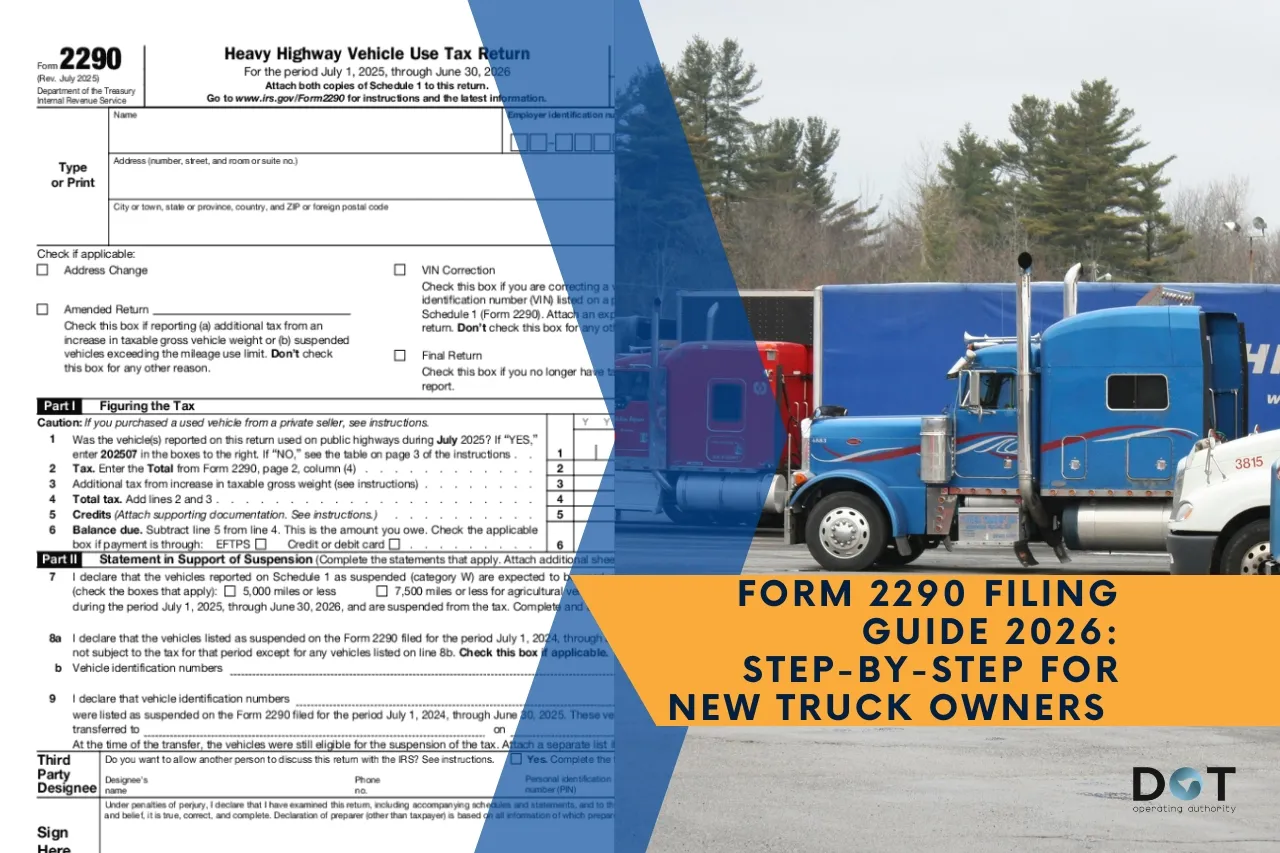
Every new truck owner eventually runs into it not on the road, but in the paperwork. Before your truck can legally operate, there’s one requirement that can’t be skipped: Form 2290. This form is tied to the Heavy Vehicle Use Tax, and it plays a direct role in whether your truck can be registered. For many first-time filers, the process feels unfamiliar, but in reality, it’s a structured system that becomes easy once you understand what each part means.
What is Form 2290 and Who Must File in 2026
At its core, Form 2290 is an IRS filing used to report and pay Heavy Vehicle Use Tax for trucks operating on public highways. If your vehicle weighs 55,000 pounds or more, you’re required to file. That includes most commercial trucks used by owner-operators and small fleets. There’s also a category known as suspended vehicles, which applies to trucks driven below 5,000 miles annually. These vehicles don’t owe tax, but the filing requirement still exists, something that’s often overlooked.
Key Information You Need Before Filing Form 2290
Filing becomes much easier when your information is prepared ahead of time. You’ll need:
- Your EIN, which identifies your business with the IRS
- Your VIN, which must be entered exactly as assigned
- Your taxable gross weight, which determines your tax amount
Each of these plays a specific role in the process, and even small errors can lead to delays. Taking a few extra minutes to verify them can save hours later.
e-Filing vs Paper Filing: Which Option is Better in 2026?
While some still consider mailing the form, e-filing has become the standard for a reason. Electronic filing is faster, more accurate, and gives you quicker access to Schedule 1, the document that proves your filing is complete. This is the form you’ll need when dealing with registration and renewals, so getting it quickly matters. Most truck owners today choose platforms like DOT Operating Authority because they simplify the process and reduce the chances of errors.
How to Fill Out Form 2290
Understanding how to fill out Form 2290 in 2026 involves following a clear sequence. You start by selecting your filing method, then move into entering your business information exactly as it appears with the IRS. From there, you’ll input your vehicle details, including the VIN, weight category, and first-use month. The first-use month is particularly important. It determines your filing deadline and when your tax period begins. After entering your details, you’ll determine whether your vehicle is taxable or suspended, calculate the tax, choose a payment method, and submit the form. Once the IRS accepts it, your Schedule 1 will be issued. That document is what confirms your compliance. Without it, registration cannot move forward.
Avoid Common Filing Mistakes
Most mistakes happen when filers move too quickly or misunderstand certain terms. Incorrect VIN entries, wrong weight classifications, and using an SSN instead of an EIN are among the most common issues. While they seem minor, they can delay processing or result in rejection. The key is simple: review everything carefully before submitting.
Form 2290 Deadlines, Penalties and Annual Renewal Rules
Form 2290 follows a strict timeline. The filing deadline is the last day of the month following your truck’s first use. Missing this deadline can lead to penalties and interest from the IRS, along with potential delays in registration. It’s also important to remember that the filing is an annual requirement. Filing once isn’t enough; it must be done each tax year to remain compliant.
For new truck owners, Form 2290 is one of the first real compliance steps in the industry. It might seem complex at first, but once you understand the structure, it becomes part of your routine operations. When you focus on accuracy, meet deadlines, and keep proper records, the process runs smoothly and your truck stays on the road without unnecessary interruptions. If you’re looking to make filing easier, DOT Operating Authority offers a streamlined way to handle your return, while dotoperatingauthority.com can support your broader compliance needs as your business grows.