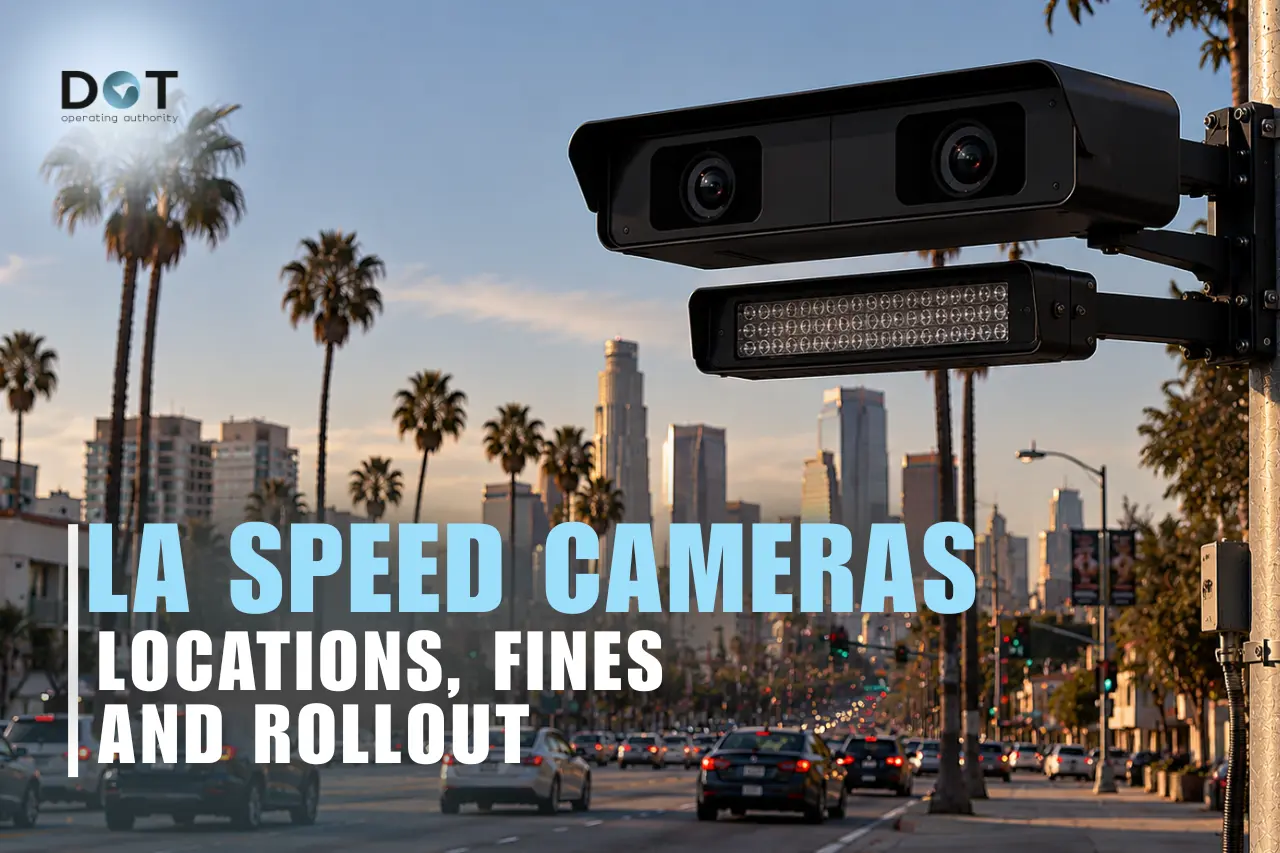
Los Angeles began activating its first automated speed enforcement cameras on October 26, 2026, marking the start of a phased citywide rollout. The new Los Angeles speed cameras are being installed along designated corridors where speeding, serious crashes, and vulnerable road users are key concerns. Drivers will not receive financial penalties immediately. Each newly activated camera location begins with a 60-day warning period, during which motorists traveling at least 11 mph over the posted speed limit receive warning notices rather than civil fines.
LADOT expects the pilot to expand to 125 locations across the City of Los Angeles by the end of 2026, so drivers should expect the rollout and the start of citation periods to happen in phases rather than on one citywide date.
When Do Los Angeles Speed Cameras Start Issuing Tickets?
The first LA speed cameras began activating on October 26, 2026, but that date marks the beginning of enforcement activity not the immediate start of fines. Under the Speed Safety System pilot, every camera location receives its own 60-day speed camera warning period when it is first activated. During that period, vehicles recorded traveling at least 11 mph over the posted limit receive mailed warnings rather than financial penalties.After those 60 days expire, the location can begin issuing civil citations. That distinction matters because Los Angeles is not activating all 125 systems at once. LADOT says deployment will continue through the end of 2026, and each newly activated location begins its own 60-day warning period.
So there is no single date when every camera in Los Angeles starts issuing fines. LADOT expects the earliest activated sites to begin issuing fines first, while later installations will continue issuing warnings longer. LADOT’s October 22 update also confirms that the city is publishing camera locations and their current status online so drivers can see which systems are active.
Where Are Los Angeles Speed Cameras Located?
LADOT did not select the Los Angeles speed camera locations randomly. The agency says it used crash data, speeding data, concentrations of vulnerable road users, and stakeholder input to determine where to install the systems. Priority areas include streets with higher levels of speeding and speed-related crashes, as well as locations near schools, senior centers, and unmarked crosswalks. The pilot is designed to place systems across all 15 Los Angeles City Council districts. That means the program is specific to the City of Los Angeles. It should not be interpreted as a countywide rollout covering every road in Los Angeles County.
Some council districts have already published detailed corridor lists. For example, Council
District 12 identifies locations along Reseda Boulevard, Nordhoff Street, Balboa Street, Tampa Avenue, Valley Circle Boulevard, and Sesnon Boulevard.
FOX 11 also identified major corridors associated with the rollout, including streets such as Sunset, Venice, Olympic, and La Brea. Drivers looking for an LA speed camera locations map or the most current street list should use LADOT’s Speed Safety System page, since deployment status can change as additional cameras are activated.
How Do the Speed Cameras Detect Violations?
Los Angeles is using automated speed enforcement to identify vehicles traveling significantly above the posted speed limit. According to LADOT, the systems activate for vehicles traveling at least 11 mph above the posted speed limit. The camera captures the vehicle’s rear license plate information and sends the data to LADOT’s Parking Enforcement and Traffic Control division. Staff then verify the violation before a notice is mailed to the vehicle’s registered owner. The 11-mph threshold does not change the legal speed limit. A street posted at 35 mph is still a 35-mph street. The camera-enforcement threshold simply determines when the automated system begins recording violations for this program.
LADOT also says it designed the system with privacy limitations. The system collects only the license plate information needed for enforcement. LADOT states that the system does not capture or share personally identifiable information with local, state, or federal law enforcement. California law may require disclosure in certain cases.
The city’s program documents also require photo-enforcement signs near active systems. Each site begins with a warning period lasting 60 calendar days.
How Much Are Los Angeles Speed Camera Fines?
Once a camera’s warning period ends, Los Angeles speed camera fines follow a graduated schedule based on how far the recorded speed exceeds the posted limit.
| Recorded speed | Fine |
| 11–15 mph above the posted limit | $50 |
| 16–25 mph above the posted limit | $100 |
| 26 mph or more above the posted limit, below the 100 mph tier | $200 |
| Traveling at 100 mph or more | $500 |
The top tier is important to read correctly. The $500 fine applies when the vehicle’s actual recorded speed is 100 mph or more. It does not mean the driver must be traveling 100 mph above the posted limit. These violations are treated as civil violations, rather than conventional criminal traffic citations. Under the city’s program, they do not add points to a driver’s license. That differs from a situation where a police officer stops you and issues a conventional speeding citation. Drivers should also remember that the automated fine schedule does not eliminate other enforcement possibilities. LADOT also says it designed the system with privacy limitations. The system collects only the license plate information needed for enforcement. According to LADOT, the system does not capture personally identifiable information or share it with law enforcement. Exceptions apply when California law requires disclosure.
What Should Drivers and Fleet Owners Do Now?
The practical response is simple: know where the active systems are, follow posted speed limits, and do not assume the warning period applies citywide forever. LADOT is publishing camera locations and activation status through its Speed Safety System website. LADOT is rolling out cameras in phases, so drivers should check the official list for updates. Older social media posts or screenshots may contain outdated information. Watch for enforcement signs near active locations. Allow enough travel time to avoid speeding when delays occur.
For fleets, delivery companies, rideshare operators, service businesses, and other organizations with multiple vehicles, the registered-owner structure deserves extra attention. The issuing agency mails the notice to the vehicle’s registered owner, who may not have been driving at the time. A fleet may therefore want a simple internal process for reviewing each mailed warning or citation:
- Identify the vehicle.
- Match it to the driver or assigned trip.
- Record the date, time, and location.
- Review whether the notice corresponds with the vehicle’s operating records.
- Keep track of recurring corridors where drivers may encounter active cameras.
These are practical fleet-management steps, not additional requirements created by LADOT. The broader point is that automated speed enforcement changes how violations reach businesses. A mailed notice may arrive after the trip is already over, so organized vehicle and driver records can make the review process easier.
Los Angeles has now entered the active phase of its speed-camera pilot, but the rollout is gradual. The first Los Angeles speed cameras began operating on October 26, 2026, and every newly activated location starts with a 60-day warning period before civil fines begin. LADOT plans to expand the network to 125 locations across the city by the end of 2026.
For drivers, the main takeaway is not simply “cameras are live.”
It is that activation dates, warning periods, and the start of financial penalties can differ by location. Follow the posted speed limit, watch for enforcement signs, and use LADOT’s official Speed Safety System page for the latest camera locations and rollout status.