
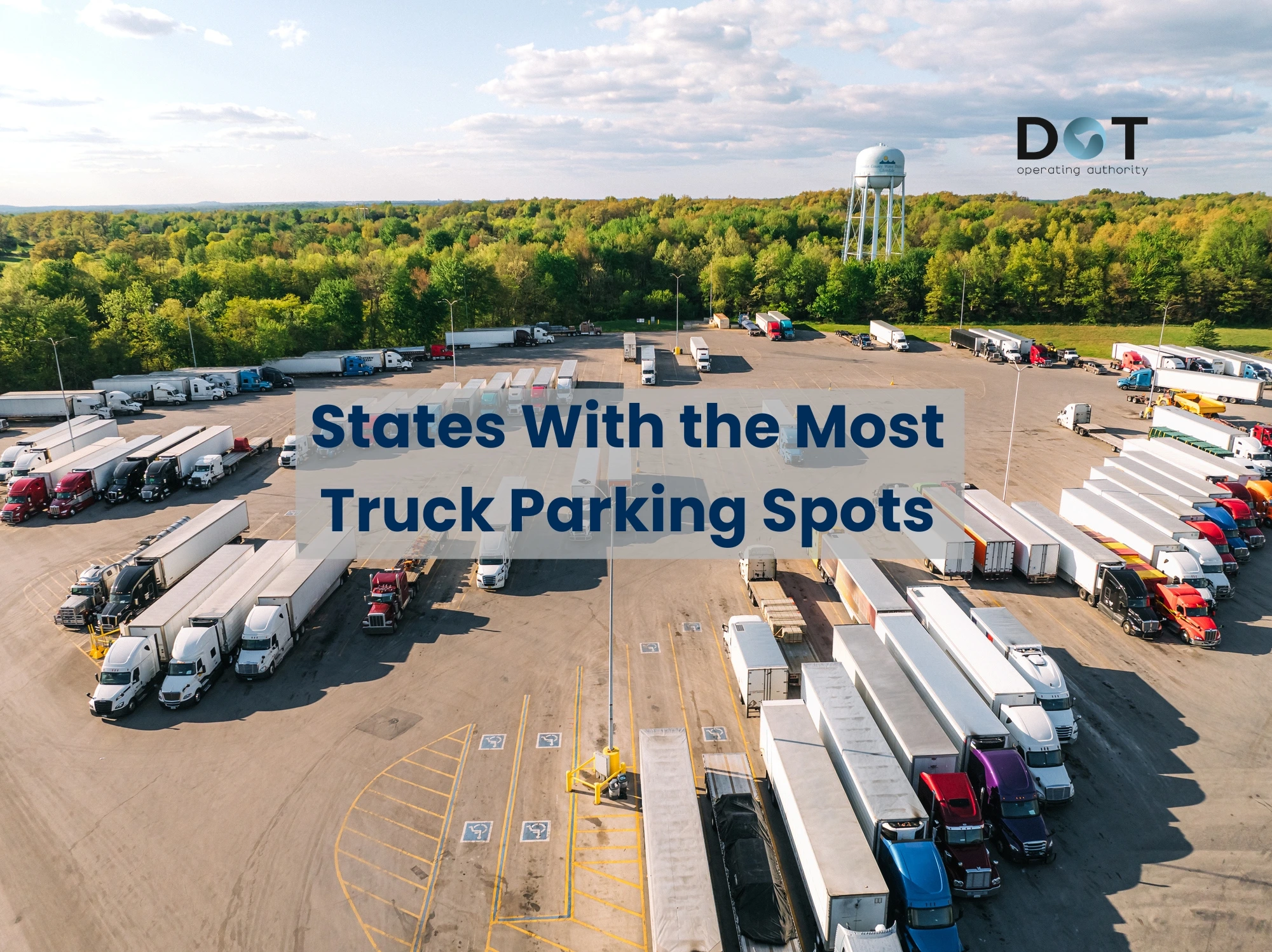
If you’ve been on the road long enough, you already know truck parking isn’t guaranteed anywhere in the US. Every day, drivers plan routes around fuel stops, delivery windows, and Hours of Service (HOS) limits. But one thing can still throw everything off at the end of the shift: finding a place to park. In some states, it’s routine. In others, it turns into a last-minute scramble. That gap exists because truck parking availability isn’t evenly distributed. Some states have built out strong infrastructure to support heavy freight traffic, while others are still catching up. And that difference directly impacts safety, efficiency, and how drivers plan their day.
Where You Can Park Your Truck Overnight
Across the country, the types of overnight truck parking options are fairly consistent, the challenge is how available they are when you need them. Truck stops remain the most reliable choice. They offer large truck parking lots, fuel, and basic amenities that drivers depend on. Rest areas are another common option. They provide free truck parking, but space is limited and often fills up early, especially along busy corridors.
In some areas, drivers turn to retail or industrial parking lots, depending on local rules. More recently, commercial truck parking and reserved spaces have been expanding, giving drivers more control in high-demand regions. These paid options can make a big difference, especially when searching for “truck parking near me” late at night isn’t working. Wherever you stop, the fundamentals stay the same: avoid residential areas, check local regulations, and stick to well-lit, active locations. Planning your stop ahead of time is now part of running an efficient route.
Private vs. Public Truck Rest Areas Ratio Across the US
In the US, truck parking is heavily skewed toward private infrastructure. While public rest areas are widely used, they make up only a small portion of total capacity.
Public truck parking, mainly highway rest areas, often provides free truck parking, but space is limited and typically operates on a first-come, first served basis. In high-traffic corridors, these spots fill up quickly, sometimes hours before drivers are ready to stop. By comparison, private truck stops and commercial truck parking lots dominate the market, accounting for roughly 88% of all truck parking spaces, while public facilities make up only about 12%. These private options offer more availability and services, but the cost can vary depending on the region and demand. In some areas, parking may be free with fuel purchases, while in others, especially near major cities, secure or reserved truck parking comes at a higher price. From an industry standpoint, experts often point to a 1:4 parking ratio (one parking space for every four trucks) as a recommended benchmark. The current imbalance between public and private capacity highlights why finding consistent parking, especially free options remains a challenge for drivers across the country.
US States With the Most Truck Parking Spots
When it comes to total truck parking capacity, a few states consistently lead the country. Industry data shows that Florida ranks first, followed by other high-capacity states like Illinois, Texas, and Ohio. These states handle massive freight volumes and have built the infrastructure to support it.
Midwest States With Strong Truck Parking Infrastructure
The Midwest is one of the most dependable regions for finding parking, largely because it sits at the center of US freight movement. Key states
include:
- Illinois
- Indiana
- Ohio
- Michigan
- Missouri
- Iowa
This region is built around major freight corridors like I-70, I-80, and I-90. Because of that, parking infrastructure is more developed, with larger truck stops and more consistent spacing between them. For drivers, that means fewer surprises when it’s time to shut down.
Best Southern States for Truck Parking
The South has been expanding rapidly, both in freight demand and parking availability. Top states in this region include:
- Florida
- Georgia
- North Carolina
- Kentucky
- Virginia
Florida leads in total spaces, while Georgia and North Carolina benefit from major interstates and strong distribution networks. Kentucky and Virginia play key roles as connecting points between regions, which helps drive parking development along major routes.
Western States: Long Distances and Strategic Parking
Out West, truck parking looks different. It’s less about density and more about distance. Important states include:
- California
- Arizona
- Oregon
- Montana
In these states, drivers often deal with longer stretches between stops. Parking locations are fewer, but they’re strategically placed along key highways. Planning becomes essential, especially in rural areas where missing one stop can mean driving a long distance to the next available truck parking lot. California adds another challenge. It has heavy freight traffic but limited space for expansion, especially near major cities, which can make parking harder to find than expected.
Northeast States: Freight Flow Meets Limited Space
The Northeast is one of the most challenging regions for truck parking. Key states include:
- New Jersey
- Massachusetts
- Pennsylvania
These states handle a high volume of freight, but land constraints and dense urban development limit the ability to expand parking infrastructure. As a result, truck parking shortages are more common, especially near major metro areas. Drivers in this region often rely on private truck parking or paid options, since public spaces tend to fill up quickly.
Why Truck Parking Availability Matters
Truck parking isn’t just about convenience, it directly affects safety, compliance, and efficiency. When drivers can’t find parking, fatigue becomes a real issue. Some end up parking on shoulders or ramps just to comply with HOS rules, while others push beyond safe limits trying to find a spot. Compliance is another challenge. Regulations don’t adjust based on parking availability, which puts drivers in tough situations when their clock runs out. Operationally, parking shortages lead to delays, missed appointments, and higher costs. Over time, these issues affect both individual drivers and entire fleets.
How Truck Parking Capacity Is Measured
When discussing truck parking in the US, it’s important to understand what’s being counted. Public truck parking includes rest areas and government-managed facilities. These are widely used because they’re free, but they often have limited capacity. Private truck parking includes truck stops and commercial lots. Major chains like Pilot Flying J and Love’s Travel Stops & Country Stores provide a significant portion of available
spaces nationwide. But numbers alone don’t tell the full story. A state may have thousands of parking spots, but if freight demand is high, it can still feel like there’s not enough parking available.
What States Are Doing to Improve Truck Parking
Efforts to expand truck parking are happening across the country. Federal funding programs have already allocated millions toward building new parking facilities and upgrading existing ones. States are adding capacity at rest areas, improving safety features like lighting, and exploring new ways to use available land. At the same time, private solutions are growing. Reserved parking systems and paid lots are becoming more common, offering drivers more predictable options. Technology is also helping. Real-time apps and parking platforms are making it easier to locate and secure parking before reaching high-demand areas.
According to the American Transportation Research Institute’s 2025 Truck Parking Index, truck parking availability varies significantly across the US, largely depending on freight volume and highway infrastructure. States like Florida, Illinois, Texas, and Ohio have some of the highest public truck parking capacity, while the Midwest generally offers more consistent access overall. In contrast, the Northeast and parts of the West face tighter conditions due to higher demand and limited space, making planning ahead essential for drivers. The report reinforces that truck parking directly impacts safety, compliance, and efficiency across the industry. For carriers and owner-operators needing help with compliance and operating authority setup, support is available through DOT Operating Authority through (888) 669-4383.