If you’ve been in trucking for even a little while, you already know how this goes. One year everything feels stable, and the next there’s a new FMCSA update that everyone suddenly has to figure out.
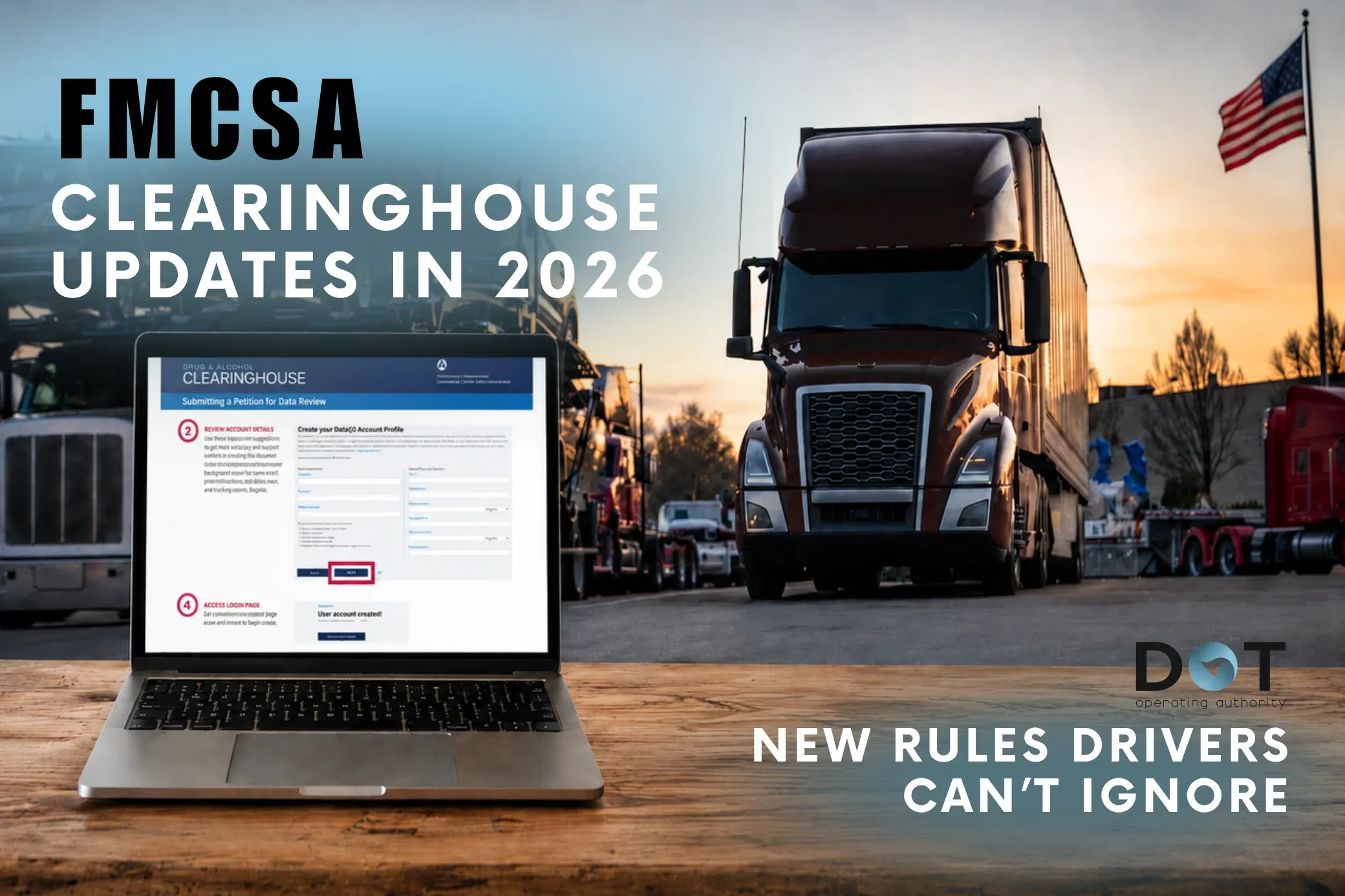
2026 is one of those years again. The focus right now is the FMCSA Clearinghouse, especially identity verification and how drug and alcohol violations are reported and tracked. Nothing about the system is brand new, but the way it’s being enforced in 2026 feels tighter. There’s not much space left for delays or small mistakes anymore. And whether you’re a driver or running a company, this isn’t something you can just push aside. Before we get into what’s changed, it’s worth quickly going back to the basics of what people actually mean when they ask what the FMCSA Clearinghouse is in the first place.
What is FMCSA Clearinghouse and Why It Actually Matters
The FMCSA Clearinghouse is basically a federal record system that tracks drug and alcohol violations for CDL and CLP drivers. It was created under the Federal Motor Carrier Safety Administration, and the idea behind it is pretty straightforward to stop drivers from “resetting” their history just by switching jobs or states. Before this system existed, a violation in one company didn’t always follow a driver cleanly into the next. That gap is what the Clearinghouse closed. Now, once something is entered, whether it’s a failed test or a return-to-duty status, it follows the driver until it’s resolved properly. And in real life, that changes everything about hiring and compliance.
How does the Clearinghouse process work?
It’s not complicated, but it does rely on everyone actually doing their part. Employers are expected to check the Clearinghouse before hiring a driver. Not after. Before. On top of that, they also have to run yearly checks on active drivers. If there’s a violation, it has to be reported and entered into the system. Once that happens, the driver is basically paused from operating a commercial vehicle until they go through the Return-to-Duty process. State licensing agencies also pull from the same system. So if someone is marked as prohibited, their CDL status can be affected directly. No loopholes, no separate records. It all connects back into one system.
Who is exempt from FMCSA Clearinghouse?
Most CDL and CLP drivers are in it. That’s the reality. There are a few narrow exemptions like certain non-FMCSA driving situations or specific government-related operations but for the average truck driver or carrier, the answer is simple: you’re in the system, no exceptions.
FMCSA Clearinghouse Updates 2026 and What’s Actually Changing
Here’s where things start to feel different. The 2026 FMCSA Clearinghouse updates don’t rebuild the system. They tighten it. Especially around identity verification and reporting speed. A lot of the rules people already know are still there. Pre-employment checks, annual queries, violation reporting, Return-to-Duty requirements all of that is still the foundation. But enforcement is getting sharper. One of the biggest shifts is identity verification. Drivers are being asked to go through more secure checks when accessing or updating their Clearinghouse records. It sounds small, but it’s aimed at fixing real issues like mismatched identities or duplicated records. Another change people are noticing is timing. Employers are expected to report violations faster than before. Not weeks later, not whenever paperwork gets done closer to real-time expectations. That’s where compliance starts to feel more intense in daily operations.
There’s also better syncing between state CDL systems and the Clearinghouse itself. So if something changes in one place, it’s more likely to show up everywhere else without delay. The direction here is pretty clear. Less lag, less inconsistency, more direct enforcement under current FMCSA rule changes 2026 and broader new DOTregulations 2026. It’s not about adding more rules, it’s about making the existing ones harder to work around.
Guidance for employers dealing with FMCSA compliance in 2026
If you run a fleet or manage drivers, this is where things get real. The FMCSA compliance side of the Clearinghouse has always existed, but in 2026 it feels less forgiving. The expectation is simple: if a driver is in your system, their status should always be accurate and current. The problem most companies run into isn’t ignorance, it’s timing. Something gets missed. A query doesn’t get run. A violation sits too long before it’s entered. And those small gaps are exactly what audits tend to pick up on.
The FMCSA Safety Measurement System and broader safety oversight tools are already built around identifying patterns like that. So even small inconsistencies can snowball into bigger issues during reviews. For employers, the practical side of all this usually comes down to routine. Checking driver files regularly instead of waiting for annual cleanups. Making sure Clearinghouse queries are actually being done on schedule. And keeping communication open with drivers so nobody is surprised when something shows up in their record. Drivers have a role here too. If something happens testing, return-to-duty steps, any violation, it’s better to deal with it immediately instead of letting it sit and grow into a bigger problem later. That’s really what drug and alcohol Clearinghouse registration and ongoing monitoring are meant to support in the first place.
The FMCSA Clearinghouse updates 2026 may not look massive at first glance, but they’re changing how compliance works in real day-to-day trucking operations. Things are moving faster now. Reporting timelines are tighter, identity verification is stricter, and there’s a lot less room for paperwork delays or overlooked mistakes. For drivers, that means keeping a closer eye on your Clearinghouse record and staying proactive about your status. For carriers and employers, it means building a compliance process that actually stays organized instead of relying on reminders, spreadsheets, or last-minute fixes.
That’s really where the industry is heading overall clearer records, faster reporting, and fewer gaps in the system. If you need help navigating FMCSA compliance, operating authority, registrations, or other trucking paperwork requirements, DOT Operating Authority can help simplify the process and keep your business moving without unnecessary delays. You can also speak directly with their team at (888) 669-4383 for assistance with compliance services and transportation filings.