
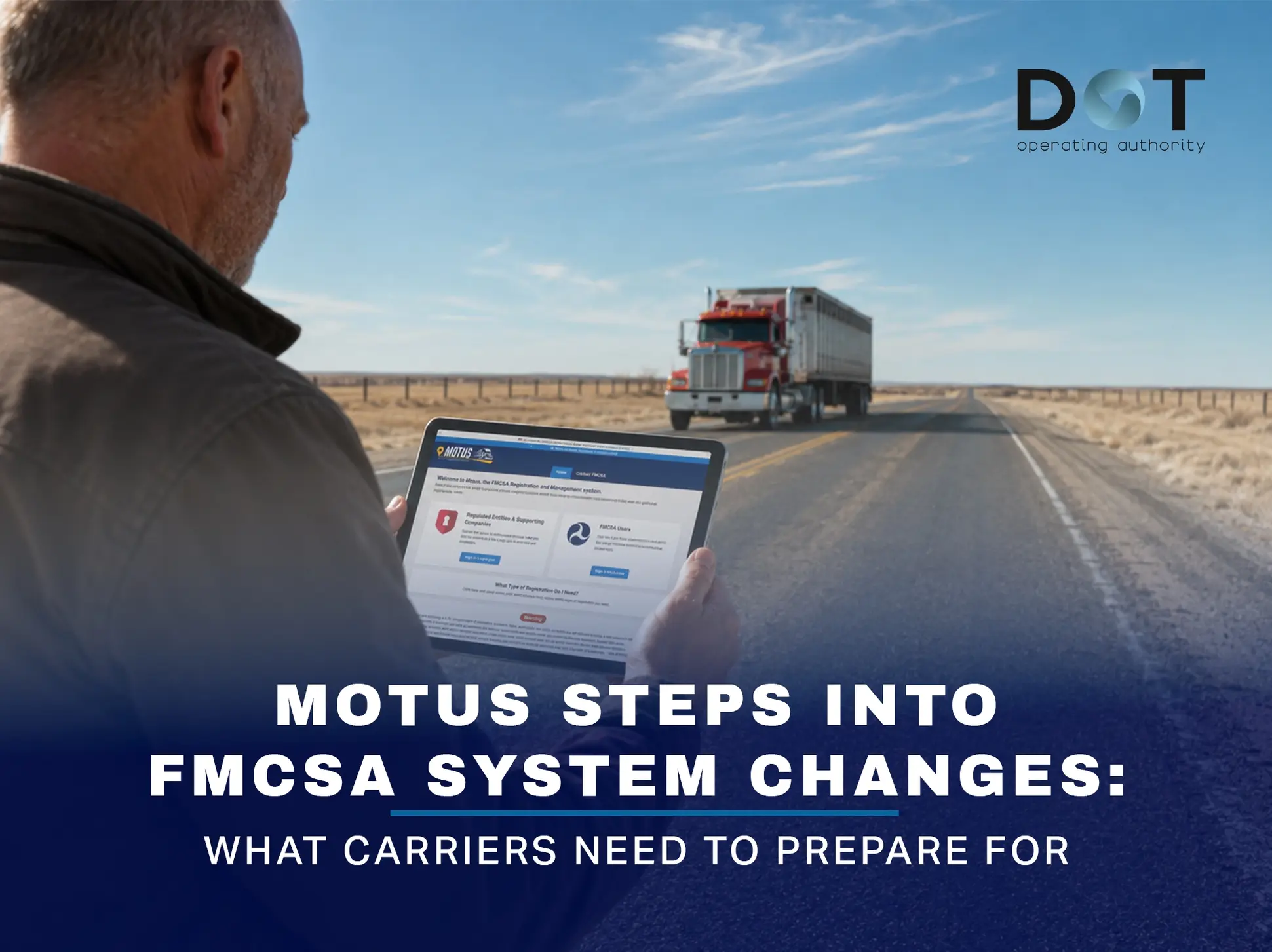
As practice shows, dealing with FMCSA systems has often been frustratingly complicated for carriers. Information had to be entered in multiple places, account access was often confusing, and simple updates could take far longer than expected. Some records matched across systems. Others didn’t. Carriers got used to chasing paperwork, waiting on approvals, and trying to keep compliance information organized across disconnected platforms.
Now that’s changing!
The FMCSA is pushing deeper into digital compliance management with the rollout of Motus and several connected modernization efforts behind it. And while plenty of carriers hear “new federal system” and immediately think of paperwork headaches, the bigger story here is how compliance itself is changing. Everything is becoming more connected and faster too.
Registration records, insurance filings, identity verification, safety data systems that used to sit separately are starting to communicate with each other in real time. That means inconsistencies that once slipped through for months may now get flagged almost immediately.
For trucking companies, especially smaller carriers and owner-operators, this shift matters more than people realize. A missing address update, outdated MCS-150 filing, incorrect company official, or mismatched Login.gov account could create bigger problems than it used to. Not because FMCSA suddenly became stricter overnight, but because automated systems don’t overlook details the same way humans sometimes do. And that’s really where the Motus FMCSA conversation starts.
The old system wasn’t exactly built for today’s trucking industry. Over time, FMCSA added layers of databases, portals, verification systems, and compliance tools that didn’t always integrate smoothly. Carriers often had to repeat the same information across multiple platforms. Sometimes records are updated in one place but not another. Sometimes things just disappeared into the system and nobody knew why.
That created delays, confusion, and compliance gaps. The new registration system is supposed to reduce a lot of that friction by centralizing how carrier information gets processed and verified. Instead of depending so heavily on manual reviews, the agency is leaning into automated validation and digital identity systems. Which honestly makes sense considering how much trucking operations themselves have changed over the last decade.
Modern fleets already rely on digital logs, telematics, tracking software, electronic maintenance systems, cloud-based driver files – the regulatory side was always going to catch up eventually. And once these systems become interconnected, data accuracy starts carrying a lot more weight. Something as simple as outdated insurance information or a missed DOT biennial update could potentially trigger registration issues faster than before. That’s why carriers are hearing so much lately about reviewing FMCSA Portal access, updating registration information sheets, and cleaning up company records before Motus fully rolls out.
Where Motus Fits Into All This
A lot of people still ask, “What is Motus in trucking?”
Part of the confusion comes from the fact that “Motus” gets used in different conversations. In the FMCSA world, it’s tied to the new registration modernization effort. In broader business operations, Motus is also associated with mileage tracking and reporting technology used by companies managing vehicle operations and reimbursements. The important part isn’t really the branding, though. It’s the direction the industry is moving.
Carriers are entering a compliance environment where organized operational data matters more than ever. Mileage tracking, reporting consistency, digital documentation, identity verification – all of it connects back to visibility. That’s why more fleets are investing in better operational tools now, including some of the best mileage tracking apps for managing mileage logs for taxes, reimbursement reporting, and fleet documentation. And honestly, a lot of smaller carriers are behind on these tasks.
Some still store maintenance records in filing cabinets. Driver qualification files end up scattered across emails and PDFs. Somebody forgets a password to the FMCSA Portal and nobody notices until a filing deadline shows up. Those habits become riskier once compliance systems start automating verification processes.
Key FMCSA Changes Carriers Should Be Watching
The biggest mistake carriers can make right now is assuming Motus is just another website redesign. It’s bigger than that. FMCSA is gradually building a more centralized compliance structure where identity systems, operating authority records, insurance filings, and USDOT information
connect behind the scenes.
And once automation increases, inconsistencies become easier to detect. That could mean:
- Delays in authority processing
- Registration verification problems
- Access issues tied to identity mismatches
- Faster compliance flags
- More scrutiny on outdated carrier records
Some carriers won’t notice much difference. Others are probably going to realize their information has been inaccurate for years.
Verify the Correct Company Official in the FMCSA Portal
This part matters more than people think.
FMCSA has already advised carriers to confirm the correct “Company Official” is listed inside the FMCSA Portal before Motus launches publicly. That person should be the actual owner or an authorized company representative responsible for managing the USDOT number. The Login.gov email connected to the FMCSA Portal should also match the one used for Motus.
Sounds simple, but plenty of trucking companies have old employee emails tied to accounts nobody can access anymore. Others used office managers or third-party contacts years ago and never updated permissions afterward. That becomes a problem once identity verification gets tighter. So when people ask, “Do trucking companies need identity verification for Motus?” – realistically, yes. The whole system is moving in that direction.
Review USDOT and MCS-150 Information Now
This is another area where carriers tend to procrastinate until the last minute. FMCSA has been encouraging companies to review and update their registration information before the new system fully transitions. That includes:
- Business addresses
- Contact details
- Company ownership info
- Operating classifications
- USDOT records
- Authority filings
Most of the paperwork gets handled through the MCS-150 Biennial Update process. And despite how often carriers hear terms like DOT Biennial Update or FMCSA Biennial Update, a surprising number still aren’t fully sure what the filing actually covers. If your biennial update due date passes without updates, or if information no longer matches across systems, automated verification may create delays that didn’t happen under older processes. That’s why understanding things like MCS-150 instructions and registration system requirements matters a lot more now than it did a few years ago.
Digital Recordkeeping Is Becoming Non-Negotiable
There’s really no way around this anymore. As FMCSA systems become more data-driven, carriers need organized digital records. Not “we’ll find it somewhere” records. Actual centralized documentation.
That includes:
- Driver qualification files
- Insurance paperwork
- Hours-of-service records
- Safety reports
- Maintenance logs
- Mileage tracking data
- Accident documentation
The carriers that have already invested in digital operations probably won’t struggle much here. The ones still relying on scattered spreadsheets, paper folders, or disconnected systems may feel the pressure once automated compliance screening ramps up. And it’s not just about audits anymore. Faster verification systems mean problems can surface during registrations, renewals, authority updates, or account access reviews.
Expect Compliance Checks to Move Faster
This might be the biggest operational shift of all. Older FMCSA systems often moved slowly enough that discrepancies sat unresolved for weeks or months. Modernized systems are designed to validate information almost instantly across connected databases. So
if insurance records don’t match registration details, or identity information conflicts between systems, carriers may
find out much sooner than before.
That’s why questions like:
- Will MC Numbers disappear under Motus?
- Will Motus replace the Unified Registration System?
- When does Motus open for everyone?
- Is Motus mandatory?
keep circulating throughout the industry right now. Some answers are still evolving as FMCSA continues rolling out updates. But the overall direction is already clear: compliance management is becoming more automated, more centralized, and much more dependent on accurate
digital records.
Motus isn’t just another FMCSA software project that carriers can ignore until the deadline hits. It’s part of a much larger shift happening across the trucking industry. Federal compliance systems are becoming more connected, more automated, and far less forgiving of outdated information. The carriers that stay ahead of it now cleaning up USDOT records, organizing digital files, monitoring FMCSA news, and maintaining accurate reporting systems will probably avoid a lot of future headaches. And honestly, that’s what this transition is really about. This is not just about technology or registration systems. Visibility. Accuracy. Accountability- that’s where trucking compliance is heading next.
At DOT Operating Authority, we help drivers, carriers, and transportation businesses navigate the trucking and vehicle transport industry with reliable support and nationwide services. Whether you need help understanding transport requirements, DOT compliance, registrations, or vehicle transport preparation, our team is here to help make the process easier. Call us today at (888) 669-4383 to get started. So, do not hesitate to contact our team and we will handle all the issues within no time, the answer is pretty clear, do not judge a book by its cover.